
Symbolic monument to victims of war crimes in Bogoro: a beacon of hope and peace in eastern DRC
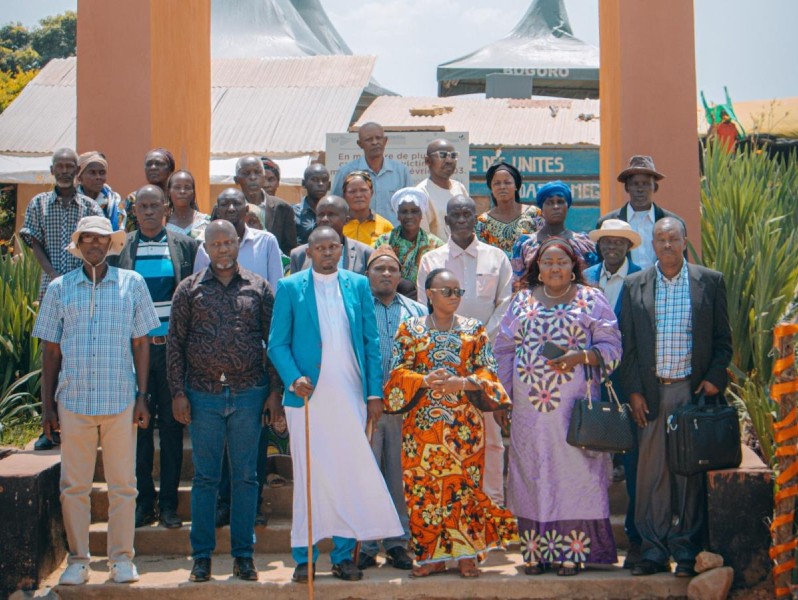
Members of the local community participate in the unveiling of the Bogoro monument, Bogoro, Ituri, DRC, February 24, 2026.
Victims and community members in Bogoro, in Ituri Province, Democratic Republic of the Congo, gathered on February 24, 2026, to dedicate a memorial monument honoring those who suffered as a result of war crimes and crimes against humanity committed during the attack of February 24, 2003. The ceremony, which took place on the 23rd anniversary of the attack, was a moment of remembrance, dignity, and collective reflection for the community.
The Bogoro Monument was conceived, designed, and created through a victim-led process, in close collaboration with the Bogoro community and with the support of a local architect. The monument serves as a permanent memorial, honoring those who lost their lives and recognizing the healing and hope associated with the reparations ordered in this case by the International Criminal Court (ICC) and implemented by the Trust Fund for Victims (TFV).
The construction of the monument was made possible by contributions from the Federal Republic of Germany and the community of Bogoro, which were matched by the ICC/TFV.
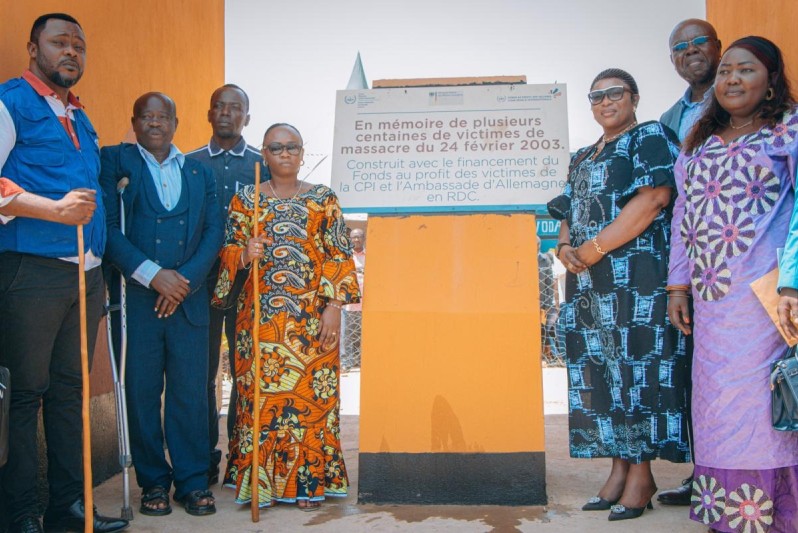
The unveiling of the Bogoro monument, Bogoro, Ituri, DRC, February 24, 2026.
Henriette, a victim-beneficiary of the reparations program in Katanga and a resident of Bogoro, stated: “For us, this is a historic monument that will remind us that violence is never a good thing and that we must cherish peace and coexistence.”
The monument’s inauguration was initially scheduled for February 2025; however, the resurgence of violence in the Kivus, which spread to Ituri Province, made it impossible to hold the event. Despite the passage of time, the importance the community attaches to the monument reaffirms the enduring relevance of initiatives in the areas of recognition and remembrance.
According to the German Embassy in the DRC, “Germany’s contribution to reparations for the victims and the construction of the monument illustrates Germany’s long-standing commitment to the international criminal justice system and transitional justice. Given our own historical experience, it was of great importance to us to support not only the reparations component but also the construction of the monument as a shared space of remembrance—designed in collaboration with the community. Remembrance and commemoration are ongoing processes, and justice is not limited to reparations alone. We hope that the monument will help the younger generations of Bogoro and the region to continue remembering and to turn these memories into action, so that these crimes will never be repeated in Bogoro or elsewhere.”
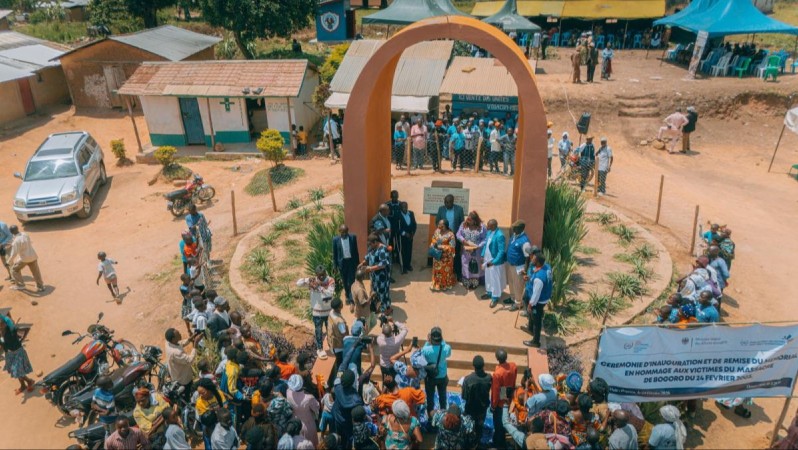
The ceremony was attended by victims, community leaders, government representatives, civil society organizations, and members of the media.
The Chair of the TFV Board of Directors, Andres Parmas, once again emphasized the link between reparations and remembrance: “Although the reparations program will be completed in 2023, the Trust Fund for Victims will continue to support the victims and the community of Bogoro. With the valued support of the German Embassy in Kinshasa, the Trust Fund for Victims reaffirms its commitment to highlighting the crucial role of public recognition of past events and the role of remembrance in processes of justice, healing, and peacebuilding—including in contexts where violence continues to affect the lives of people in eastern Democratic Republic of the Congo. May this site serve as a lasting reminder of the importance of accountability and the prevention of recurrence.”
The monument is a measure implemented alongside the reparations ordered by the ICC in the case of The Prosecutor v. Germain Katanga, the first proceedings formally concluded by the ICC’s Second Chamber following the full disbursement of reparations by the Trust Fund for Victims on January 30, 2025. In its final decision, the Chamber recognized the perseverance and dedication of the victims of the Bogoro massacre throughout the entire reparations process, as well as the support of states and the cooperation of national authorities that made the reparations possible.
Background
The TFV contributes to the realization of the pillars of restorative justice under the Rome Statute through measures that recognize and compensate for the harm inflicted on victims and their families by crimes falling under the jurisdiction of the International Criminal Court, namely genocide, crimes against humanity, war crimes, and the crime of aggression.